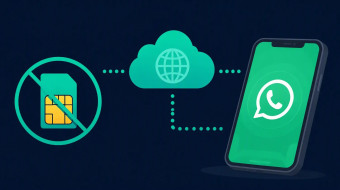



Almost every app, marketplace, and social platform now asks for a phone number before you can do anything — not because they need to call you, but because a phone number is a cheap way to confirm you're a real, unique person and not a bot creating a thousand accounts an hour. That's a reasonable thing for a platform to want. It's a much less reasonable thing for you to hand over every single time, especially to services you'll use once and never touch again.
Whether you call it a temp number, a temp phone number, or a one-time verification number, the idea is the same — a number that exists just long enough to catch one code. This is exactly the gap Second Number fills.
Why Platforms Ask for a Number in the First Place
SMS verification exists mainly to prevent spam account creation and account takeover. A one-time code proves that whoever is signing up currently controls a working phone number — harder to fake at scale than an email address.
What Makes a Number Good for Verification Specifically
-
Speed matters a lot. Most verification codes expire in 2 to 10 minutes. A number that takes three minutes to deliver a text is functionally useless for this purpose.
-
The number needs to look legitimate to the platform. Some services specifically detect and block ranges known to belong to virtual number providers.
-
It's built for exactly one code. A temporary number — sometimes called a 10-minute phone number, since it's built to last just long enough for one SMS — receives a single verification message from the specific service you picked at purchase, and nothing after that. There's no calling either way, and no second message on the same number. If you need to verify again — a different account, or the same one later — you get a new number.
Step-by-Step: Verifying an Account With a Temporary Number
-
Check the platform's rules first, if you're unsure whether it allows non-personal numbers.
-
Pick a country that matches what the platform expects.
-
Confirm the platform verifies by SMS, not by voice call — these numbers can't receive calls.
-
Rent the number and copy it in exactly the format requested.
-
Wait for the code, which should land within seconds on a reliable service.
-
Enter the code before it expires. If nothing arrives within a minute or two, don't keep waiting — the number has likely already been silently blocked by the destination platform; get a different one.
What a Temporary Number Can and Can't Do
|
Can do |
Can't do |
|
|
Verification SMS |
Receive exactly one, from the service you chose at purchase |
Receive a second message after that, on the same purchase |
|
Calls |
— |
Make or receive any calls |
|
Reuse |
Buy a new number any time you need another verification |
"Hold" one number for future, unrelated codes |
Common Verification Failures and What They Actually Mean
"Invalid number" errors usually mean the platform has a blocklist of known virtual number prefixes. Trying a different country or provider often resolves this instantly.
Codes that never arrive are almost always a silent block on the platform's end, not a delivery failure on the number's end.
Codes that arrive but say "expired" when entered point to a delivery delay, usually from an overloaded free service.
Is This Against Any Platform's Terms?
Most consumer platforms — social apps, marketplaces, messaging services — don't prohibit virtual numbers in their terms of service. A smaller set of services, mostly in banking and government, explicitly require the number to belong to the account holder.
Verifying Multiple Accounts Without Confusion
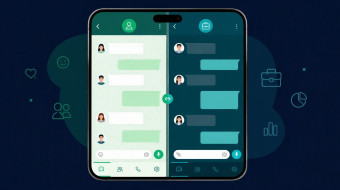
Anyone managing more than one account — a personal profile and a business one, or several test accounts for development — quickly runs into a practical problem: keeping track of which number belongs to which account. Since each temporary number is scoped to exactly one verification, you'll naturally end up buying a separate number per account. Second Number's dashboard labels each purchase by date, country, and the service it was used for, which makes this manageable at scale.
Two-Factor Authentication: Why a Temporary Number Isn't the Right Tool
SMS-based two-factor authentication needs the same number to keep working every login, not just once — and a one-time temporary number is spent after its first and only code, so it simply can't do that. If a service you care about uses SMS 2FA, use a temporary number to get through the initial sign-up, then switch to an authenticator app for ongoing logins — don't plan on the same virtual number being there next time, because it won't be.
What to Do If a Platform Explicitly Blocks Virtual Numbers
Some services maintain active blocklists targeting known virtual number ranges. If you hit this wall consistently even after switching countries and carriers, check whether the platform offers an alternative verification method, like email or an authenticator app.
Frequently Asked Questions
Why does one verification code arrive instantly and another takes minutes?
Delivery speed depends on the sending platform's own SMS infrastructure as much as the receiving number.
Can the same number be used to verify multiple different accounts?
No — each number is scoped to the one service you selected at purchase and delivers exactly one SMS. For multiple accounts, buy a separate number for each.
What should I do if a code arrives after it's already expired?
Request a new code rather than entering the expired one. If the number's window has closed without the code landing at all, buy a fresh number rather than waiting on a resend.
Making It Reliable
The single biggest lever for verification success isn't luck — it's choosing a provider with broad country and carrier coverage, so when one number gets blocked by a picky platform, switching costs you thirty seconds instead of an afternoon. Second Number is built around exactly that: fast, SMS-only, one-time numbers for a single verification, across a wide range of countries.