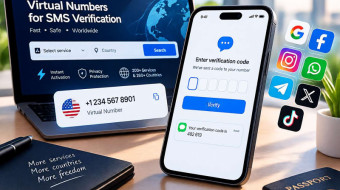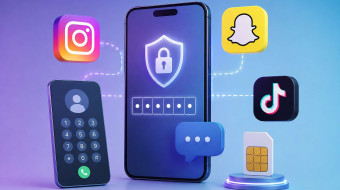



A surprising number of platforms — banking apps, delivery services, dating apps, even some job boards — quietly assume their users have a US phone number, even when the platform itself is available worldwide. If you're outside the US, or simply don't want to expose your real number to yet another app, a temporary US phone number from a service like Second Number solves this without requiring you to actually be in the country, or own a US SIM.
Why a US Number Specifically Matters
Plenty of services check the country code of a phone number as a light-touch way of confirming a user's region, even if they don't explicitly say so. A +1 number tends to unlock smoother sign-ups on US-based platforms, avoids extra identity checks some services apply to "foreign" numbers, and, for freelancers or remote workers, makes it easier to list a professional contact number that clients recognize as local.
Who Actually Needs One
-
People outside the US signing up for American apps, subscriptions, or services that expect a domestic number
-
Freelancers and remote employees working with US clients who expect a US-based contact line
-
Travelers heading to the US who want a working number before they land, without buying a local SIM on arrival
-
Businesses testing how their product behaves for US-based customers
-
Anyone needing a US number for WhatsApp, Telegram, or another OTP-verified platform that restricts sign-ups to a domestic country code
Using a US Number for OTP and App Verification
Beyond general sign-ups, one of the most common everyday uses of a US phone number is simply receiving a one-time verification code — a US number for WhatsApp, a US number for verification on a fintech app's trial, or a straightforward OTP during account activation on a US-facing platform. This is what most people actually mean when they search for a temp number for the US — not a long-term line, just enough to receive one code and move on. On Second Number, a rented number is scoped to the single code the target service sends: request the number, enter it on the platform, get the code within seconds, and that number's job is done. If you need to verify a different account, or the same account again later, you rent a fresh number for that — the same number won't pick up a second message.
How to Get One
-
Pick a provider with US coverage — not all virtual number services support every US area code or carrier, so check this before committing.
-
Choose whether area code matters to you. Some use cases don't care; others (freelancers listing a "local" number for a specific city) benefit from choosing a matching area code.
-
Confirm the platform verifies by text, not by call. These are SMS-receiving numbers only — no outbound or inbound calling — so if a platform insists on a voice call for verification, this type of number won't work for that specific step.
-
Buy the number for the sign-up you're doing right now. It's built for that one verification; don't plan around it catching anything later.
-
Start receiving the code immediately — Second Number activates the number the moment payment goes through.
US Number Formats to Know
US numbers follow the North American Numbering Plan: a 3-digit area code, followed by a 7-digit local number, typically written as +1 (XXX) XXX-XXXX. When entering a virtual US number into a form, use the format the platform specifically requests — some accept the +1 prefix, others expect it omitted, and getting this wrong is a common cause of "invalid number" errors that have nothing to do with the number itself.
Comparing Ways to Get a US Number
|
US Virtual Number (SaaS, SMS-only) |
Physical US SIM |
Free Public US Number |
|
|
Setup time |
Minutes |
Days, or requires being in-country |
Minutes |
|
Need to be in the US |
No |
Usually, or requires shipping |
No |
|
Can make/receive calls |
No |
Yes |
No |
|
Privacy of incoming messages |
Private |
Private |
Public/shared |
|
Reliable for verification |
Yes |
Yes |
Inconsistent |
Common Reasons US Verification Fails
-
The specific number range is on a known VOIP/virtual blocklist that fintech or banking platforms are especially strict about
-
The area code doesn't match what a platform expects for a given region-locked feature
-
The number was very recently used by someone else and is temporarily flagged by the carrier
Switching to a different area code or carrier within the same country usually resolves this faster than troubleshooting the platform itself.
Legitimate Uses Worth Knowing
Using a US virtual number to access publicly available US services, list a professional contact number, or manage business communication is standard practice. Where caution is warranted is with services tied to identity or finance that explicitly require a number physically issued to a US resident; those platforms usually say so directly in their sign-up requirements.
Choosing an Area Code That Fits Your Purpose
While plenty of use cases don't care which specific area code a US number carries, some do. A freelancer marketing themselves to clients in New York might prefer a 212 or 646 number over an unrelated area code, purely because it signals local presence. If area code doesn't matter for your situation, most providers will assign the fastest available number regardless of region — but if it does matter, check that your provider lets you filter by specific area code rather than just "US, any."
US Numbers for E-Commerce and Marketplace Selling
Sellers on US marketplaces and classifieds platforms often need a domestic contact number even when they're not physically in the US, particularly for cross-border sellers managing US-facing storefronts. A virtual US number lets a listing display a number that looks native to American buyers, without requiring the seller to hold a US SIM or answer calls (since these numbers don't take calls) — the verification text just routes to the same dashboard regardless of the seller's actual location.
Tax and Financial Platforms: A Word of Caution
Financial platforms — particularly those handling tax filings, banking, or credit applications — are the category most likely to explicitly require a number tied to a real US resident, and to actively detect virtual numbers as part of fraud prevention. Attempting to use a virtual number to bypass identity requirements on something like a bank account application typically violates the platform's terms directly. For general communication, testing, and non-financial sign-ups, this concern doesn't apply.
Frequently Asked Questions
Do I need a US billing address to rent a US virtual number?
No — renting the number itself typically only requires payment through a standard method; it doesn't require proof of US residency or a US billing address.
Can I use a US virtual number to make or receive calls?
No — these are SMS-only numbers, built to receive one incoming verification text. There's no calling functionality on either end.
Can I get numbers from more than one US area code at the same time?
Yes, Second Number lets you rent multiple numbers simultaneously under one account, including from different area codes.
Can I rent a US number for just one OTP code?
Yes — that's exactly what it's built for: a US number for verification, one incoming code, done. A temp phone number like this is priced per verification, not per month. If you need to verify something else, or the same platform again later, you rent a new number at that point.
Getting Set Up
Second Number offers US numbers across a range of area codes, ready in minutes for a single SMS verification, regardless of where you're actually located. Pick the country, pick the number, and receive your code — no calling, no reuse, just a clean one-time verification.