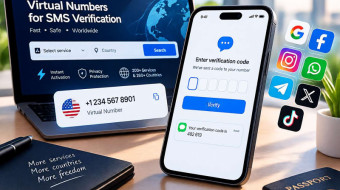



Receiving a text message without a SIM card sounds like it should be complicated, but the underlying idea is simple: a provider owns a real phone number, and instead of routing incoming texts to a physical device, it routes them to a web dashboard you can check from any browser. The complicated part isn't the technology — it's choosing between the dozens of services claiming to let you receive SMS online, many of which behave very differently under the hood.
What "Receive SMS Online" Actually Means
Most people looking for a temp number or a temp phone number are trying to solve one of these problems, whether they end up on a free public inbox or a private rental like Second Number: verifying an account without exposing a personal number, testing an app's SMS flow, or avoiding spam texts on a real line. In every case, the mechanism is the same — you get access to a number, someone or something sends a text to it, and that text shows up in an online inbox instead of on a phone. None of these are calling numbers; they receive text only.
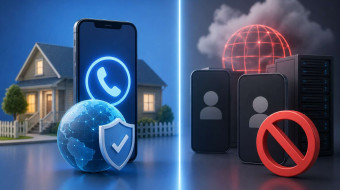
The differences between providers come down to three things: who else can see that inbox, how fast the message arrives, and whether the number is private to you or shared.
Free Public Inboxes
A large chunk of "receive SMS online" services work by publishing a list of active numbers on a webpage. Anyone visiting the page can pick one, use it, and watch the same public inbox for incoming texts. This model works because it costs the provider very little to run — they don't manage private accounts, so ad revenue alone can sustain it.
The catch is baked into the model: if the inbox is public, your message is public too. Dozens of strangers might be watching the exact same number, waiting for their own texts, and every one of them can see yours.
Private Rental Services
The alternative is a service where you rent a number tied specifically to your account, and only you see what arrives in it. This is a fundamentally different privacy model, not just a paid version of the same thing. It also tends to come with better reliability, since providers manage capacity per customer rather than letting a single number get hammered by dozens of simultaneous users. On Second Number, the number is scoped to deliver one verification SMS from the platform you select — once that message lands, that specific number's job is done.
Side-by-Side Comparison
|
Free Public Service |
Private Paid Rental |
|
|
Message privacy |
Shared with all visitors |
Private to you |
|
Speed |
Slower during peak traffic |
Consistently fast |
|
Number stability |
Can be reassigned without notice |
Yours for that one verification |
|
Country/carrier variety |
Usually limited to a few countries |
Broad, often dozens of countries |
|
Good for |
One-off, low-stakes sign-ups |
Verification tied to real accounts you care about |
Step-by-Step: Receiving Your First SMS Online
-
Decide how sensitive the message is. A forum sign-up code is low stakes. A banking or healthcare verification code is not.
-
Pick a provider that matches that sensitivity. Free public inboxes for the former, private rentals for the latter.
-
Choose a country and, if relevant, a specific carrier. Some platforms only accept numbers from certain regions.
-
Enter the number where it's requested, exactly as formatted by the provider.
-
Watch the dashboard. If a code takes longer than a couple of minutes, the number may already be blocked by the destination platform — get a new number rather than waiting indefinitely.
Why Codes Sometimes Don't Arrive
-
The destination platform detects the number range as a known virtual/VOIP number and silently blocks the SMS instead of sending it
-
The number was recently used by someone else and is temporarily rate-limited by the carrier
-
Free public numbers get so much traffic that messages queue and arrive late, past the code's expiration window
Switching to a different country or a private, less-saturated number resolves the vast majority of these cases.
These Are SMS-Receiving Tools, Not Phone Lines
Every option covered here — free or paid — receives text only. None of them make outbound calls, receive inbound calls, or forward voice traffic. If a platform tries to verify by phone call instead of text, none of these tools will help with that specific step; you'd need an actual phone line for that.
Setting Up Notifications So You Don't Miss a Code
Because verification codes expire quickly, refreshing a browser tab manually isn't always fast enough. Most private rental services offer some form of real-time notification — a dashboard that updates live, an email alert, or in some cases a webhook for developers automating the process.
Using SMS-Receiving Tools for Development and Testing
Beyond personal verification, receiving SMS online is a routine part of software development. Teams building anything with a phone-verification step need a reliable way to test that flow repeatedly, across different countries, without burning through real personal numbers. A private rental account with API access lets a test suite request a fresh number for each test run, wait for the incoming code, and verify the full flow automatically.
Regional Differences in SMS Delivery
Delivery speed and reliability aren't uniform across countries. Numbers in regions with tighter carrier regulation around virtual numbers sometimes see faster, more consistent delivery, while regions with looser oversight can see more inconsistent results. If a particular country's delivery is consistently unreliable, trying a different country is often the fastest fix.
Frequently Asked Questions
How long does it usually take for an SMS to arrive?
On a reliable private service, most messages arrive within seconds. Free public services, especially during high-traffic periods, can take anywhere from thirty seconds to several minutes.
Can I receive SMS from any country, or only a few?
This varies significantly by provider. Some support only a handful of major countries, while others cover dozens.
Is there a limit to how many messages one number can receive?
Yes — one. Each number, free or paid, is scoped to a single incoming verification SMS from the service you're using it for. That's really the whole design of a temp phone number: one code, one use. If you need to verify a second account, or the same account again later, you use a new number, not the same one again.
A Practical Middle Ground
You don't need to commit to one model exclusively. Many people use free public inboxes for genuinely disposable sign-ups and switch to a private rental — like Second Number — the moment a code matters, whether that's a financial account, a work tool, or anything they'd rather not share with strangers refreshing the same public page.